☆☆☆First report of Emanuel Holthaus, 26th scholarship holder of GRÜNWALD FOUNDATION☆☆☆
Arrival and First Impressions
As my plane slowly descended through the thick cloud cover, visibility suddenly plummeted. For minutes, we were surrounded by nothing but gray clouds. Only shortly before landing did the ground slowly emerge beneath us. At that moment, I realized: My stay in Japan was truly beginning.
I was incredibly excited and curious at the same time. All sorts of questions swirled through my mind. What would my daily life be like?
What kind of people would I meet? What awaited me? Yet I knew one thing for sure:
I was looking forward to the adventure and the food!
When I finally arrived in Osaka, Japan, after a full day of flying, I received a warm welcome from Mr. Okamoto, who provided me with a great deal of support and helped me settle in during the first two weeks.
I was able to accompany him to various appointments; he showed me where I was staying, where the nearest train station was, and where the nearest supermarket was.
Mr. Okamoto also treated me to many Japanese specialties that I had never tried before: okonomiyaki, hiroshimayaki, ramen, udon, and sushi.
Since I love to eat and appreciate good food, I enjoy trying new things, so it was particularly exciting for me. These included, for example, sea cucumber, sea urchin, and eel.
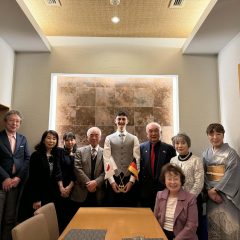
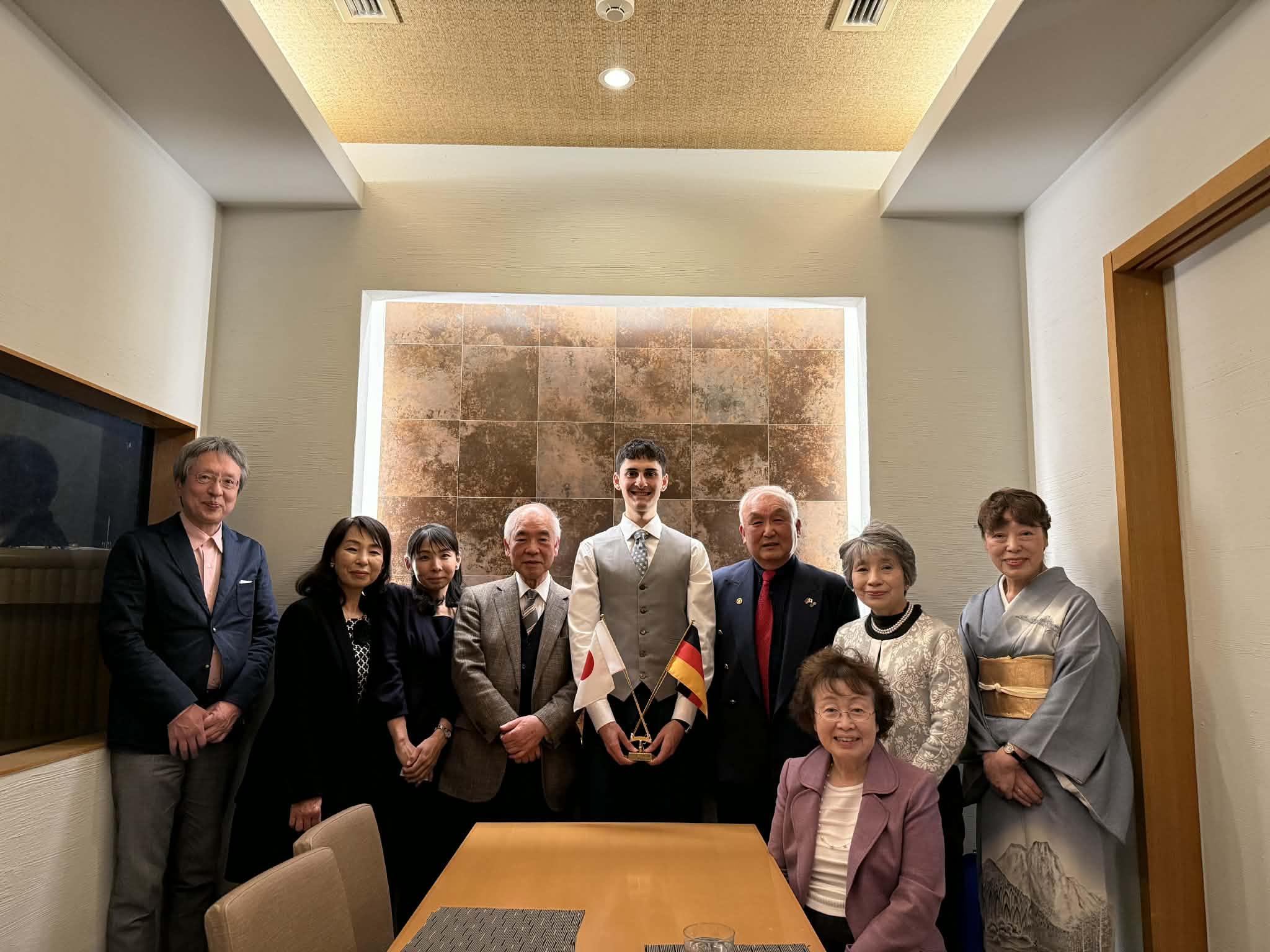
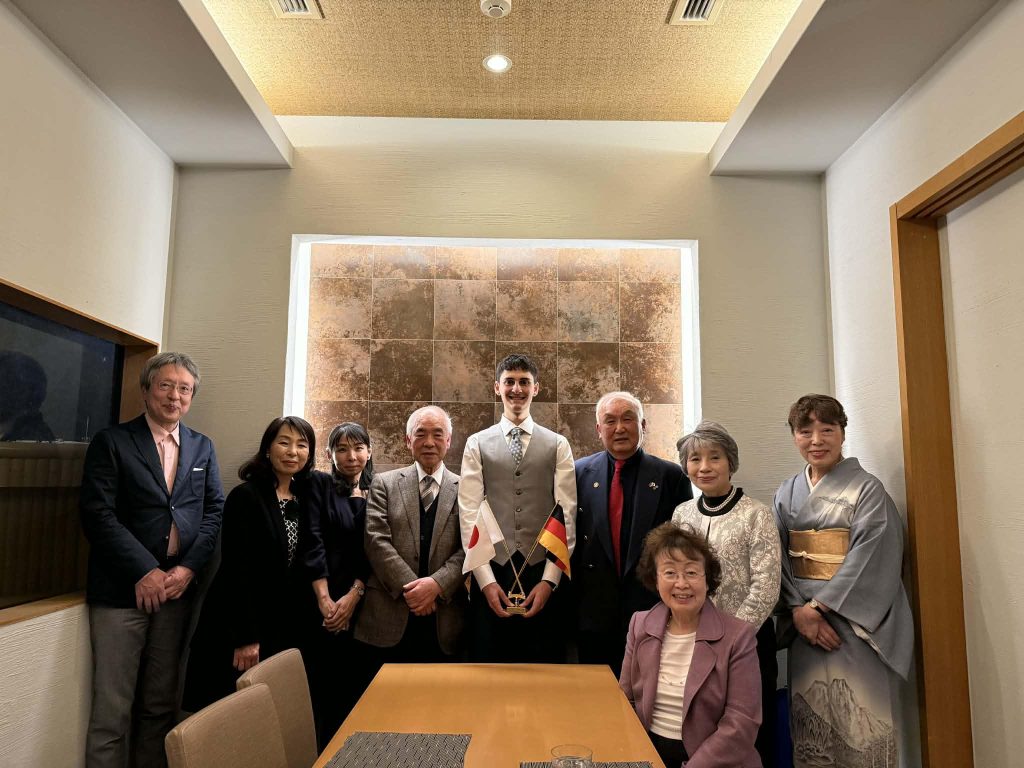
Furthermore, I experienced kaiseki for the first time at the welcome party organized for me.
Kaiseki is a traditional form of Japanese haute cuisine and consists of several small courses served one after the other. Seasonal ingredients, a harmonious combination of flavors and colors, and an artistic presentation of the dishes are especially important. Even the tableware is chosen to reflect the season.
Kaiseki originated from the Japanese tea ceremony and later became particularly popular in high society. Therefore, table manners also play an important role. The atmosphere is calm and respectful, and the guests converse in a relaxed manner, often about the ingredients, the season, or the presentation of the dishes. Especially in high society, a kaiseki dinner used to be considered a social and cultural event, a time to cultivate relationships and engage in conversation.
In my case, I was surprised to find myself talking a lot about Germany. Especially with Dr. Professor Shinyo, former japanese ambassador in Berlin, conversations about German culture and history kept arising. We talked about Thomas Mann and Wolfgang Amadeus Mozart, for example. Officially, Mozart died of a fever, but the real cause could have been food poisoning, perhaps from an undercooked Wiener Schnitzel.
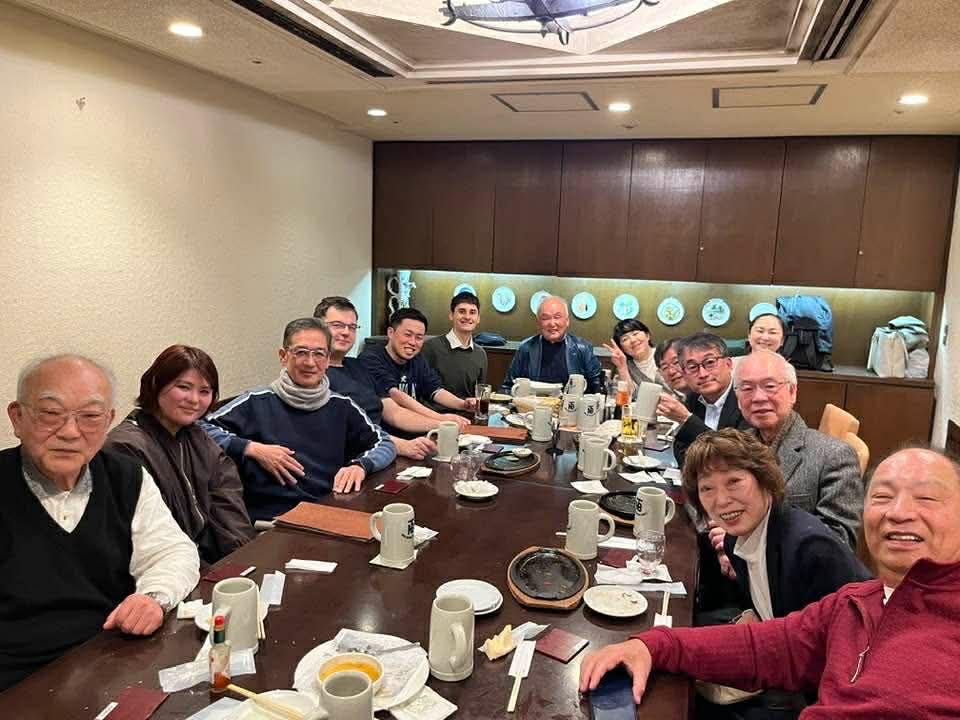
I also met many people in the Japanese-German Society who have a connection to Germany. Almost all of them had lived, studied, or worked there. This led to frequent conversations about Germany. What was particularly striking was how well many of them knew the country geographically. Many knew the cities and regions very well – and almost all of them had already traveled to more places in Germany than I had.
Upon arrival at the German Consulate General, located on the 35th floor, I was immediately struck by the incredible view over the city. There, we were warmly greeted by Ms. Saxinger and we talked about her journey to the consulate in Osaka. We also discussed current political developments and the role of women in leadership positions in Japan, particularly the fact that Sanae Takaichi had become the first conservative woman to be elected Prime Minister.
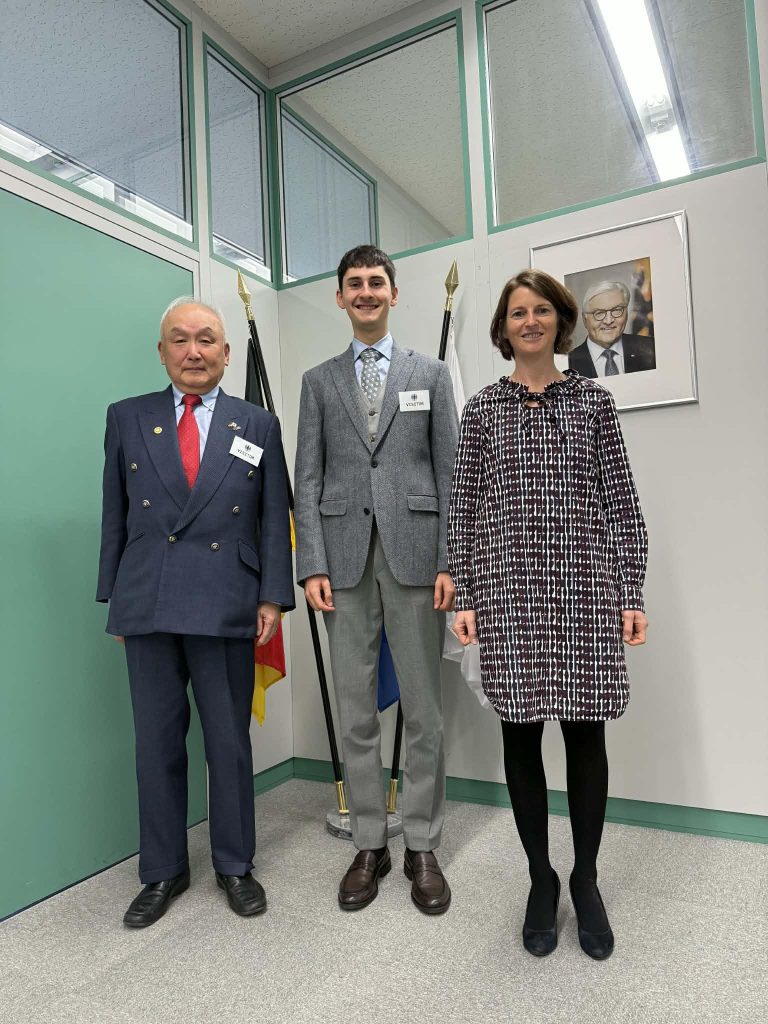
Many conversations were very positive about Germany. The excellent road infrastructure, the well-known German cars, the beautiful scenery, and famous musicians were mentioned most frequently.
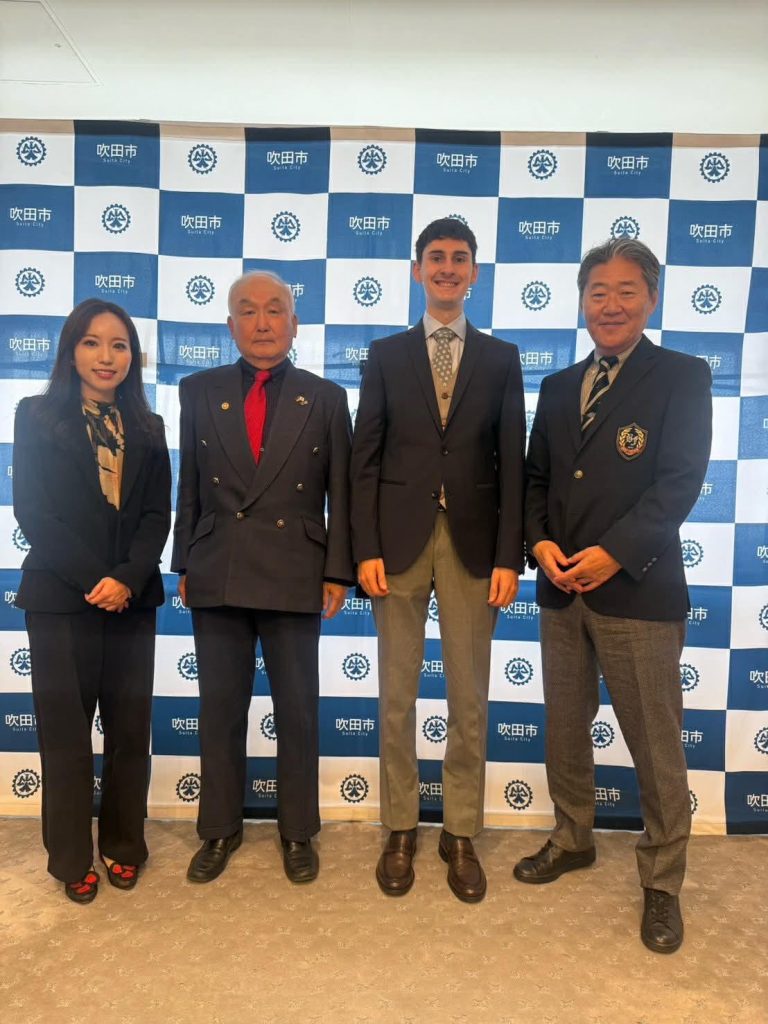
However, when I got talking to the mayor of Suita, the conversation suddenly turned to completely different topics from everyday life in Japan. I was surprised to learn that he uses five different types of salt in his cooking. The topic of bathing also came up: In Japan, it’s common to bathe regularly, and some people—especially girls and women—even do so twice a day.
I found it particularly interesting that children in Japan learn to take responsibility for their surroundings from an early age. In many schools, it’s part of everyday life for students to tidy their classrooms themselves and keep them clean together. This attitude seems to be reflected in public spaces as well, since many places appear very clean and orderly.
Taking off your shoes at the entrance also contributes to keeping the interiors clean and maintaining a certain order.
Order in Everyday Life
Not only order, but also discipline and mutual respect are reflected in Japanese culture and daily life.
During my first week, I visited the Nakanoshima Museum of Art. I was particularly struck by the tranquil atmosphere.
Many visitors read the exhibition texts very carefully and systematically moved from one station to the next. At larger panels, two lines even formed automatically so that everyone could read them. Great care was taken to be considerate of one another. Overall, it was very quiet.
I was also particularly impressed by the public transportation system. The train stations are very well organized and usually clearly signposted. At first, however, it was sometimes difficult to find my way around quickly, as much of the signage was in Japanese.
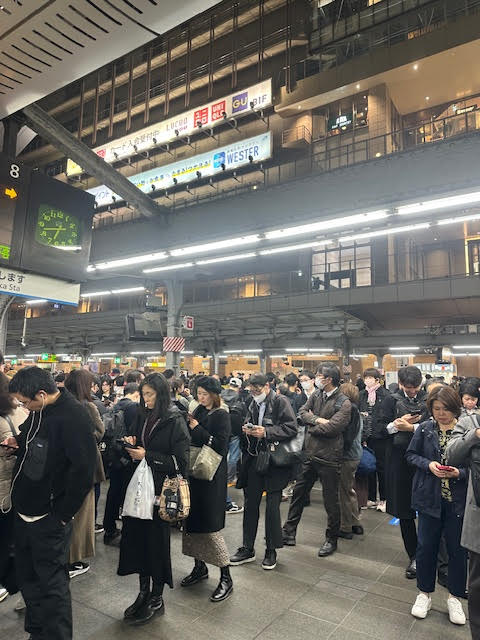
The orderliness on the platforms is especially noticeable. Even when many people are traveling, passengers line up in rows. This makes everything appear very structured.
The atmosphere on the trains themselves is also different from that in Germany. It is usually very quiet, and many people are reading or looking at their smartphones.
Supermarkets
During my stay, I quickly noticed how ubiquitous the small 24/7 convenience stores are. Chains like 7-Eleven, Lawson, and FamilyMart can be found on almost every street corner. At first, this surprised me quite a bit, as this density of small stores is hardly known in Germany. The concept originated in the USA, but it has been significantly developed in Japan and is now a completely natural part of everyday life.
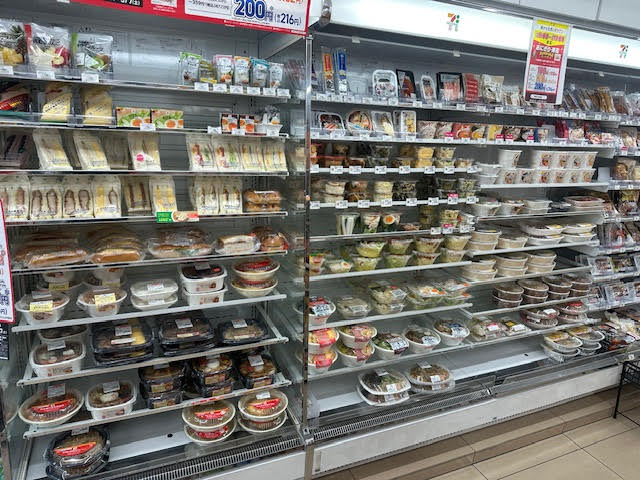
While the stores aren’t particularly large, they still offer a surprisingly wide range of products – from drinks and snacks to many everyday necessities. The large selection of ready-made meals is particularly striking. Many people quickly grab something there to take with them or to eat at home.
I also noticed something similar in regular supermarkets. They, too, offer many ready-made meals. The selection ranges from classic onigiri, sushi, and rice dishes with vegetables or chicken to pasta with tomato sauce or a wide variety of baked goods.
The Girls’ Day in Japan
During the first few days of my stay, the Japanese Girls’ Day, Hinamatsuri, also took place. Celebrated on March 3rd, it’s a day when families especially celebrate their daughters and wish them health and a bright future.
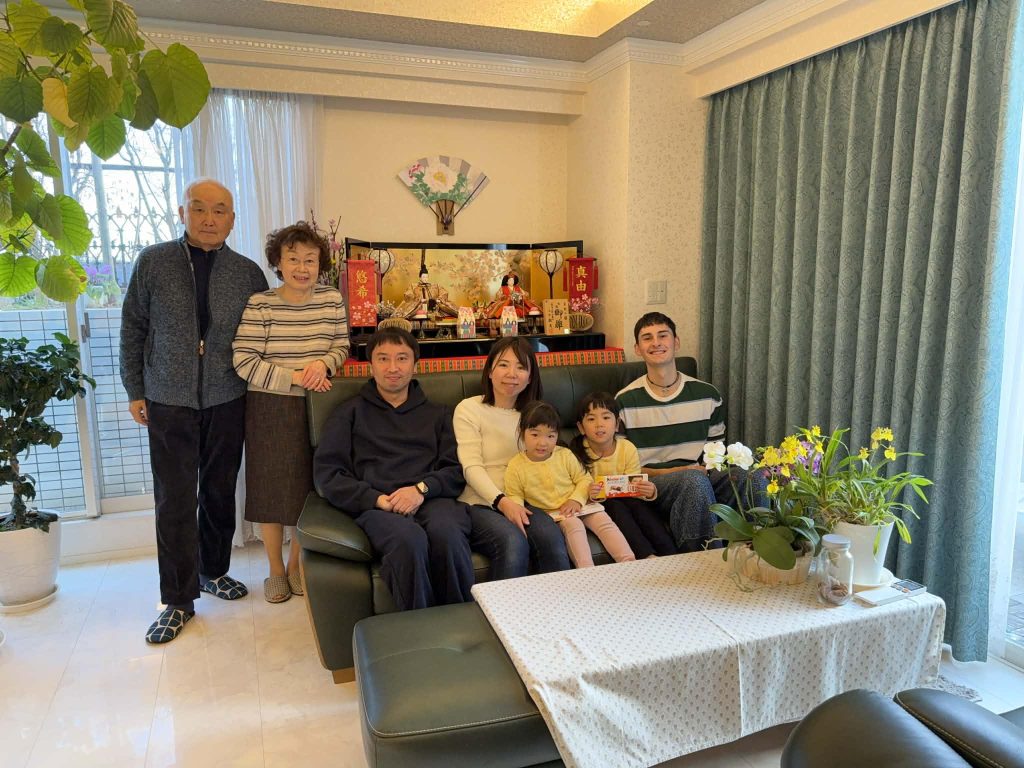
Typical of this festival are the so-called Hina dolls. These dolls stand on a multi-tiered pedestal covered in red fabric and represent the imperial court from the Heian period, including the emperor, the empress, and various ladies-in-waiting.
I would like to express my heartfelt thanks not only for Mr. and Mrs. Okamoto’s warm and welcoming manner, but also for his dedication, the Japanese lessons, and the excellent food. I look forward to the next two weeks.